

Department of Inorganic and Analytical Chemistry
The Department of Inorganic Technology and Analytical Chemistry was established under Decision No. 2448/QĐ-DCT dated September 22, 2022, issued by the President of Ho Chi Minh City University of Food Industry. The department was formed on the basis of merging the former Department of Inorganic Technology and part of the Department of Analytical Engineering and Quality Assurance.
In addition to conducting scientific research and technology transfer in the field of Chemistry, the Department is responsible for managing and operating two academic majors:
-
Inorganic Technology
-
Analytical Engineering and Quality Assurance
The Department currently has 14 full-time lecturers, including 01 Associate Professor – PhD, 01 Senior Lecturer – PhD, 05 PhD holders, 01 Senior Lecturer – MSc, 03 PhD candidates, and 03 MSc holders.

Dr. Trần Hoài Lam
Head of Department

Assoc. Prof. Dr. Đặng Tấn Hiệp
Head of International Cooperation Office_Lectuer

Dr. Nguyễn Ngọc Hòa
Director of the International Analysis Center – Lecturer

Dr. Nguyễn Thị Phương
Lecturer

Dr. Bùi Thị Phương Quỳnh
Lecturer

Dr. Võ Thuý Vi
Lecturer
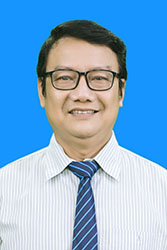 PhD. Trương Bách Chiến
Lecturer

Dr. Lê Thị Ngọc Hạnh
Lecturer

MSc. Nguyễn Văn Hòa
Lecturer

PhD. Đoàn Thị Minh Phương
Lecturer

PhD. Trần Nguyễn An Sa
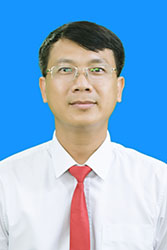
PhD. Đặng Thanh Phong
 PhD. Nguyễn Hoàng Lương Ngọc
Lecturer

MSc. Lê Thị Thanh Vân
Lecturer
 MSc. Đặng Ngọc Lý
Lecturer
2. ACADEMIC SPECIALIZATION
Major: Inorganic Technology
Students majoring in Inorganic Technology, under the Chemical Engineering field, are equipped with fundamental knowledge and industrial technologies in inorganic chemistry. They are trained with strong practical skills, participate in field trips, internships, and gain hands-on experience at modern factories across Vietnam.
The specialized knowledge includes:
· Technology for the production of basic acids and bases
· Technology for the production of inorganic fertilizers
· Technology for building materials
· Electroplating and production of chemicals by electrochemical methods
· Environmental treatment technology and advanced inorganic materials
· Modern synthesis and analysis techniques for new and advanced materials such as nanomaterials, nano-silica, ceramics, and semiconductor materials
· Conducting research and completing the Graduation Thesis under supervision of department lecturers
Major: Analytical Engineering and Quality Assurance
Students majoring in Analytical Engineering and Quality Assurance, under the Chemical Engineering discipline, are equipped with fundamental knowledge in analytical chemistry and quality assurance. They receive intensive practical training and are given opportunities for field trips, laboratory internships, and hands-on experience at modern analytical centers and QA/QC laboratories of factories across Vietnam.
The specialized knowledge includes:
· Spectroscopic analytical methods (UV-Vis, AAS, AES, …)
· Chromatographic and separation techniques (GC, LC, GC-MS, HPLC–MS, …)
· Food analytical chemistry
· Electrochemical analysis
· Environmental quality control and monitoring
· Quality testing of detergents and cosmetic products
· Application of statistical tools for process improvement and quality control
· Conducting research and completing the Graduation Thesis under supervision of faculty members
3. RESEARCH AREAS
General Research Directions
· Biomaterials, nanomaterials and their applications
· Fertilizers and crop protection chemicals
· Renewable energy
· Environmental treatment and pollution control
· Analytical chemistry
· Quality assurance & quality control
· Natural compounds and applications
Specific Research Directions
· Synthesis of bio-glass materials for biomedical applications
· Development of electrochemical catalysts for degradation of toxic organic pollutants
· Synthesis of mesoporous silica materials and development of Fenton catalysts for environmental treatment
· Synthesis of carbon aerogels for adsorption and energy storage applications
· Development of polymer membranes for fruit preservation
· Fabrication of thermally responsive nanogels
· Synthesis of biomedical-oriented nanomaterials for agriculture and healthcare
· Method validation, chemometric data analysis, and application of analytical procedures in cosmetics, food, and environmental testing
· Environmental monitoring and quality assessment of soil, water, and air
· Experimental optimization using DoE & ANN
· Extraction of natural bioactive compounds and applications in food, functional products, pharmaceuticals, and cosmetics