

Research Highlights
The Faculty of Chemical Technology, Ho Chi Minh City University of Industry and Trade, advances its research activities along an application-oriented, interdisciplinary, and practice-driven direction. Its research areas encompass a broad spectrum, including materials science, environmental technology, catalysis, cosmetics, natural products, analytical technology, and biomedical applications. These activities are further strengthened by a highly qualified academic staff, research-supporting facilities, and a dynamic scholarly environment. The works featured in the Research Highlights section represent notable outcomes that distinctly reflect the Faculty’s research strengths and academic contributions.
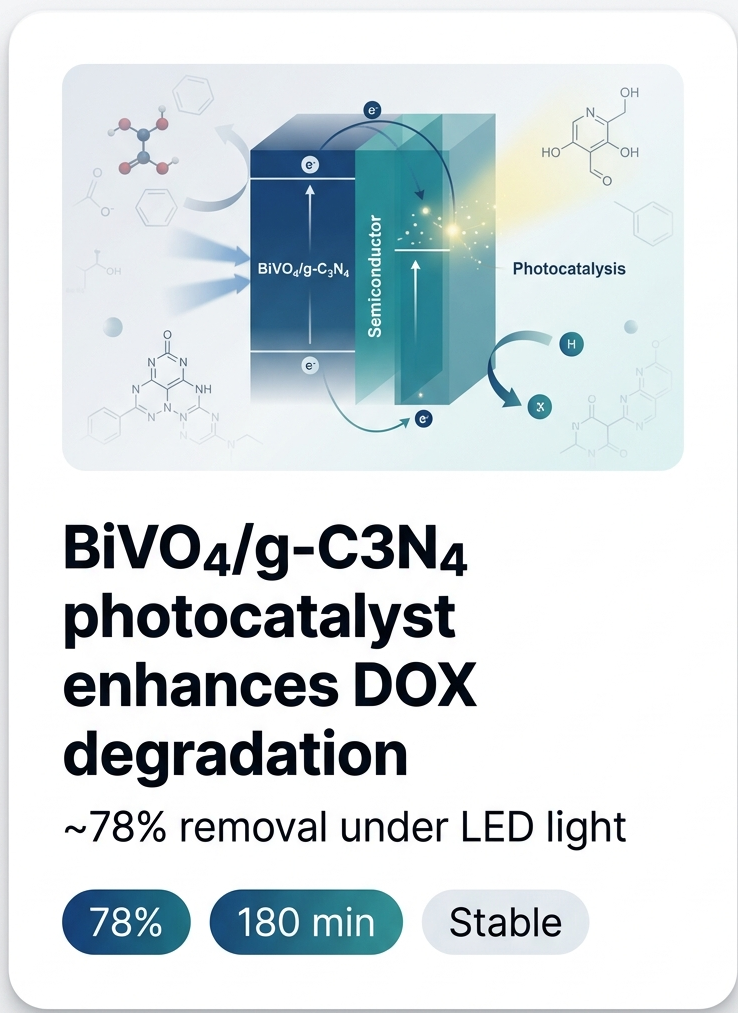 BiVO₄/g-C₃N₄ heterojunction enables efficient visible-light degradation of antibiotic pollutants
A BiVO₄/g-C₃N₄ heterojunction photocatalyst was developed for visible-light degradation of doxycycline. The optimized composite achieved about 78% removal within 180 minutes under LED irradiation, outperforming the individual components. The enhanced activity was attributed to improved charge separation and visible-light utilization, highlighting its promise for environmentally safer wastewater treatment.
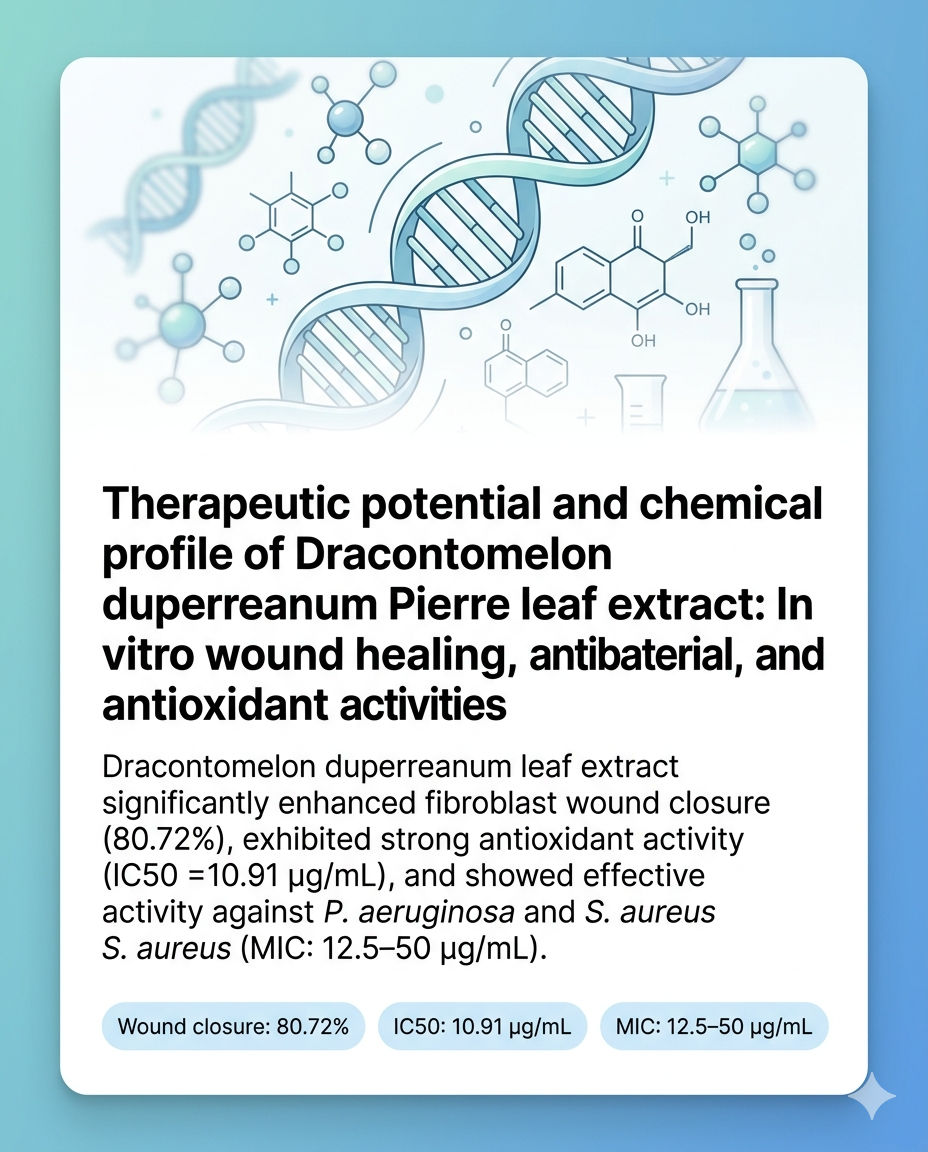
Therapeutic potential of Dracontomelon duperreanum leaf extract for wound healing and antibacterial applications
The leaf extract of Dracontomelon duperreanum demonstrated strong biological activities in vitro, significantly enhancing fibroblast wound closure (80.72%), exhibiting potent antioxidant activity (IC₅₀ = 10.91 μg/mL), and showing effective antibacterial activity against P. aeruginosa and S. aureus (MIC: 12.5–50 μg/mL). These findings highlight its potential as a natural therapeutic agent for wound healing and biomedical applications.
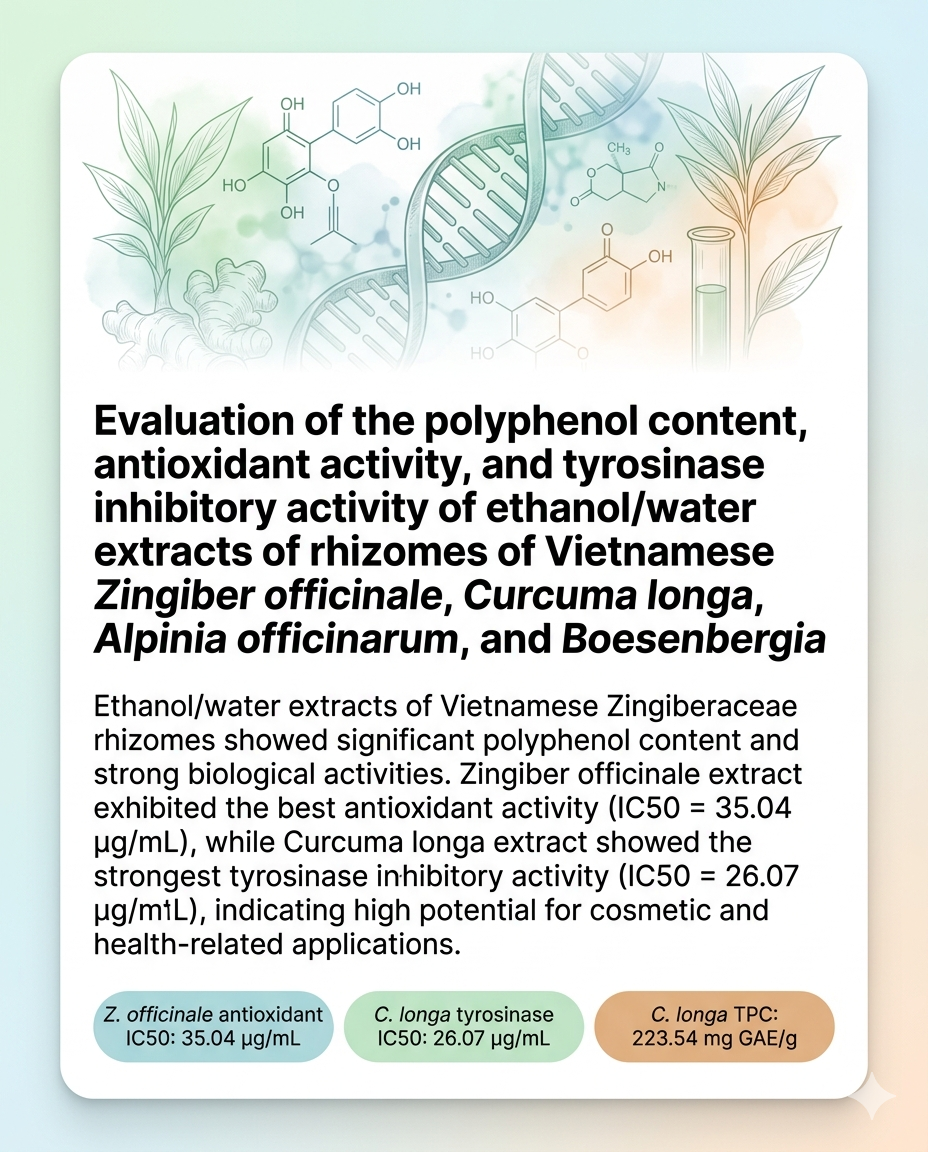
Bioactive potential of Vietnamese Zingiberaceae rhizomes for antioxidant and skin-related applications
Ethanol/water extracts of Vietnamese Zingiber officinale, Curcuma longa, Alpinia officinarum, and Boesenbergia pandurata exhibited significant polyphenol content and strong biological activities. Notably, Zingiber officinale showed the highest antioxidant activity (IC₅₀ = 35.04 μg/mL), while Curcuma longa demonstrated the strongest tyrosinase inhibition (IC₅₀ = 26.07 μg/mL) and the highest total polyphenol content (223.54 mg GAE/g), indicating high potential for cosmetic and health-related applications.
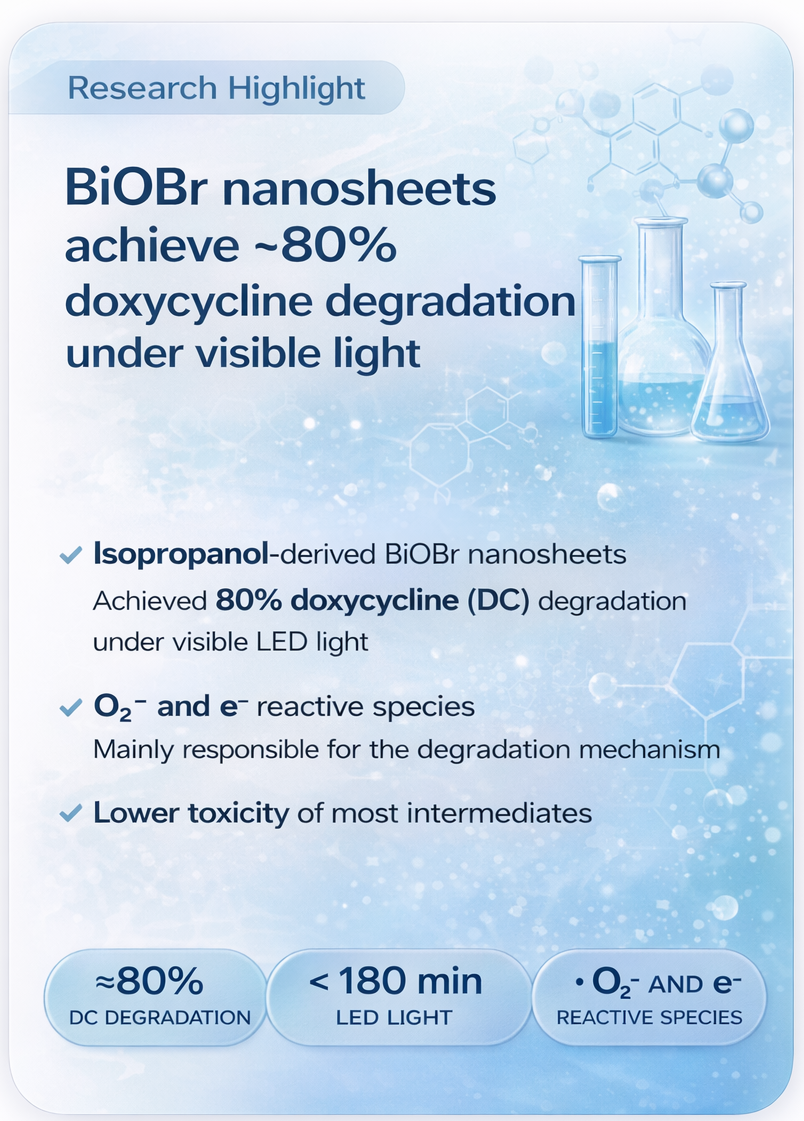
Solvent-controlled BiOBr nanosheets enable efficient visible-light degradation of doxycycline
This study shows that solvent selection strongly influences the morphology and photocatalytic performance of BiOBr nanosheets. Among the tested solvents, isopropanol-derived BiOBr delivered the best performance, achieving about 80% doxycycline degradation within 180 minutes under visible LED light. The enhanced activity was linked to improved charge separation, larger surface area, and a favorable mesoporous structure, highlighting the potential of solvent-engineered BiOBr for antibiotic-contaminated wastewater treatment.